1930s: The Depression, Voluntarism’s Finest Hour
Women responded with energy and dignity to the economic hardships of the Depression, but it was the election of Franklin Delano Roosevelt in 1932 that gave them greater political participation. Social welfare, which had been the heart of the Junior league and other women’s organizations for decades, became the focus of New Deal policies. “An exceptional group of women with a common perspective built on shared history and long-term friendships had attained high positions. They were the last generation of women educated in the Victorian world of female social reform networks that had shaped the Progressive movement,” wrote Sara M. Evans in Born for Liberty: A History of Women in America. “Eleanor Roosevelt was the emotional center of the network.” As the President’s wife and a woman with a strong social conscience, she spoke for people in need and supported her fellow Junior League members in doing the same.
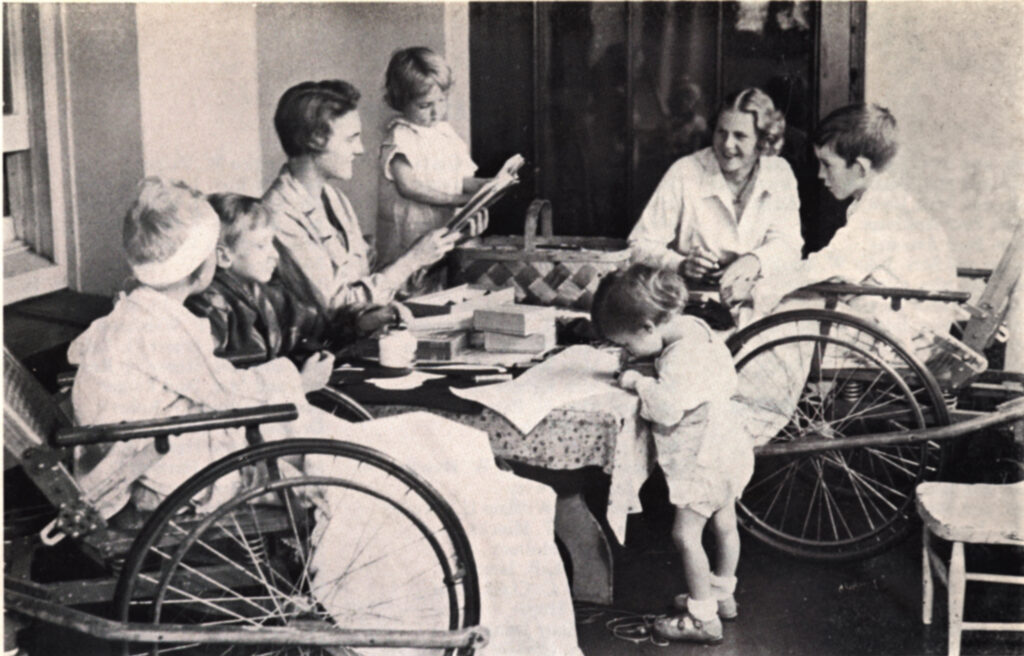
“In the present emergency special emphasis shall be put upon the League’s welfare activities…it shall endeavor insofar as possible to offer increased volunteer service and raise additional funds to be used in actual relief work.”
-League Policy, 1932-1934