1920s: New Freedoms and Responsibilities
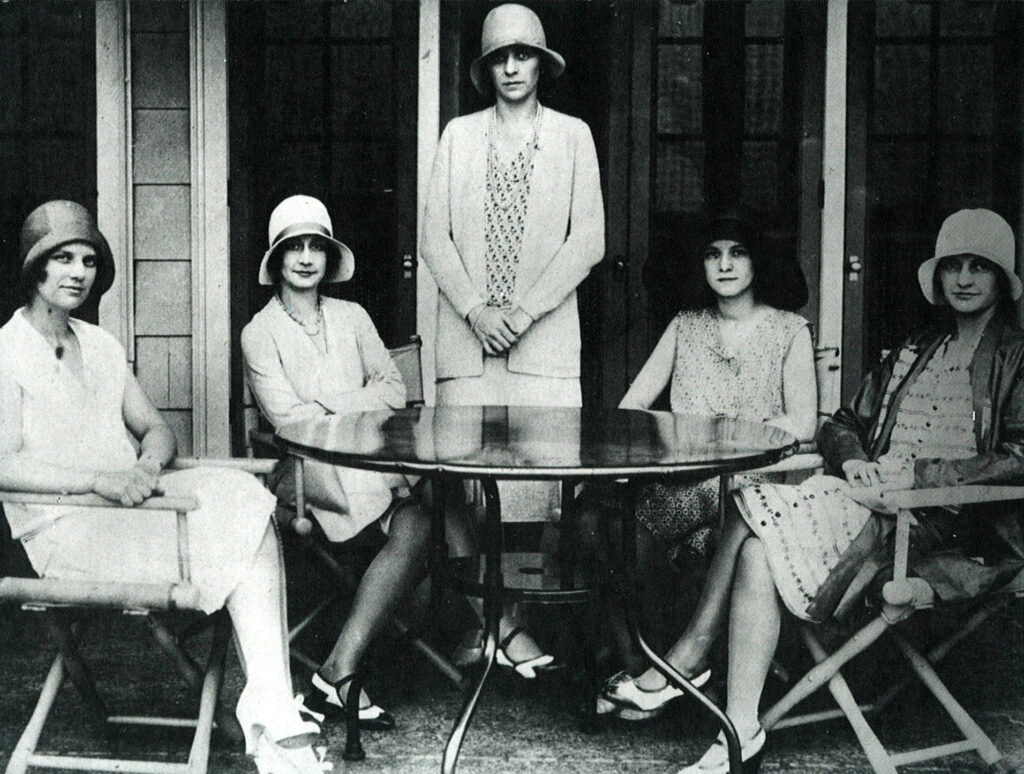
No image better symbolizes the Roaring Twenties than the flapper, recognized by her bobbed hair, scarlet lips, and fringed skirt barely covering rouged knees. Equipped with a ready-to-party attitude, she smoked, drank, and necked with handsome young men driving roadsters. She created a language and style all her own and changed forever how women acted, thought, and dressed.
If the flapper appeared giddy, so did the times. F. Scott Fitzgerald estimated that “the whole upper tenth of a nation was living with the insouciance of a grand duc and the casualness of chorus girls.” A growing middle class enjoyed the materialistic rewards of Model Ts, refrigerators, and radios. The Great War was over and a revolution was underway in the U.S. as well as the Soviet Union. “The war tore away our spiritual foundations and challenged our faith. We are struggling to regain our equilibrium,” a self-confessed flapper wrote in OUTLOOK magazine in 1922.
“In accepting membership in the Junior League a woman steps forthwith into the wider citizenship of her city…It is only as we add our contributions of service that we can be rightly said to have won our final citizenship papers.”
-Dorothy Whitney Straight